 OKC Mobile Mechanic
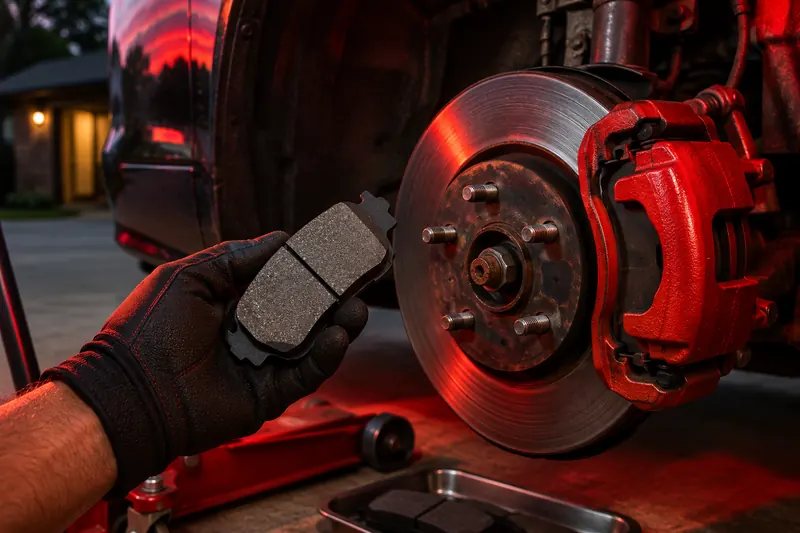
Why do my brakes squeal? Often the pads' built-in wear indicator, a small metal tab that squeals when the pads get thin. A brief squeal on the first stops of a damp morning can be normal surface rust. A steady squeal on most stops means it's time to have the pads checked.
Brakes rarely fail without warning. They usually make noise first, and the kind of noise tells you a lot about how urgent it is. Here's what each one usually means.
Squealing: usually a warning, not an emergency
A high-pitched squeal when you brake is most often the wear indicator, a small metal tab built into many brake pads. When the pad gets thin, the tab touches the rotor and squeals on purpose. It's the brakes asking for attention before things get expensive.
Not every squeal means worn pads, though:
- The first few stops on a damp morning can squeal or scrape while surface rust wipes off the rotors. If it goes away after a few stops, that's normal.
- Cheap or glazed pads can squeal even with plenty of material left.
- Missing or worn anti-squeal parts (shims, clips, lubricant on the pad backs) can let pads vibrate.
How urgent: a steady squeal on most stops means book a brake check soon. You're probably still in the cheap part of the repair, which is usually just pads.
Grinding: get it looked at now
Grinding, a rough metal-on-metal sound you can sometimes feel through the pedal, usually means the pad material is gone and the steel backing plate is scraping the rotor. Every stop cuts deeper into the rotor, and the car doesn't stop as well.
Grinding can also come from a stone stuck between the rotor and the dust shield, which sounds awful but is a quick fix.
How urgent: don't put it off. Pads that would have been a simple job now often need rotors too, and in bad cases calipers.
Pulsing or a vibrating pedal
If the brake pedal pulses or the steering wheel shakes when you stop, especially from highway speed, the rotors are usually uneven. People call them "warped rotors." Heavy stops, towing, long downhill braking and over-tightened wheel nuts all contribute.
How urgent: not an emergency, but it gets worse and it lengthens stopping distance. Rotors and pads together usually fix it.
The car pulls to one side when braking
A pull usually means one side is braking harder than the other: a sticking caliper, a collapsed brake hose or contaminated pads. A caliper that sticks can also make one wheel hotter than the others and give off a burning smell after a drive.
How urgent: get it checked soon. A sticking caliper wears pads and rotors fast.
A soft or sinking pedal
If the pedal feels spongy or slowly sinks toward the floor, that's the most serious one. It can mean air in the lines, a fluid leak or a failing master cylinder.
How urgent: don't drive the car. Book a visit to where it's parked.
Brake fluid matters too
Brake fluid absorbs moisture from the air over time, which lowers its boiling point and can corrode parts inside the system. Most manufacturers call for a brake fluid change every few years. Check your owner's manual for your car's schedule.
Oklahoma driving is hard on brakes
Stop-and-go traffic on I-35, I-40 and I-235, heavy trucks and SUVs, towing on weekends and summer heat all wear brakes faster. Many full-size trucks go through pads and rotors noticeably faster than a small car does.
Brake repair in your driveway
Pads, rotors, calipers and brake fluid are all standard driveway jobs. Your mechanic will look at the brakes, show you what's worn and give you the price before any work starts. See brake repair or book a visit.
Quick answers
Why do my brakes squeal? Often the wear indicator telling you the pads are thin. A short squeal on a damp morning can be normal.
What does grinding mean? Usually the pads are worn through and metal is hitting the rotor. Get it checked right away.
Why does my brake pedal pulse? Usually uneven ("warped") rotors.
Is a soft brake pedal dangerous? Yes. Don't drive the car until it's checked.